SD067 CONTACT MIC FOUR
USD $99.00
Like a macro lens for your ears, this is a diverse collection of high rez contact mic recordings. 13.41GB as 158 x 24bit 192kHz .WAV files with metadata & photos
Single user license – if you require a site license for multiple users, please request a quote HERE

When I first discovered Contact Mic recording back in 2006 it was due to an unlikely source: an article in a 1984 issue of American Cinematographer Magazine about Alan Splet & Anne Kroeber’s brilliant sound design work on David Lynch’s Dune. Many, many years later I found a much earlier relevant source: in 1967 kiwi kinetic sculptor Len Lye visited John Cage in New York and after showing him one of his kinetic steel works, Cage took a contact mic and revealed all the hidden frequencies inside Lyes sculpture! What an amazing confluence of inspiration….
Since 2006 I’ve released three Contact mic libraries, with this being the fourth. Along the way I have written & updated a useful reference for anyone interested in contact mic recording:
The First Rule of Contact Mic Club
After each library was completed I would kid myself I had explored everything I could think of, only to then stumble across entire new universes of sound hidden in inanimate objects. Contact Mic recording is a bit like using a macro lens on your camera. It reveals hidden microscopic worlds that when you take off the headphones are often inaudible to human ears. But what a rich world of unique tones & textures lie hidden in plain sight!
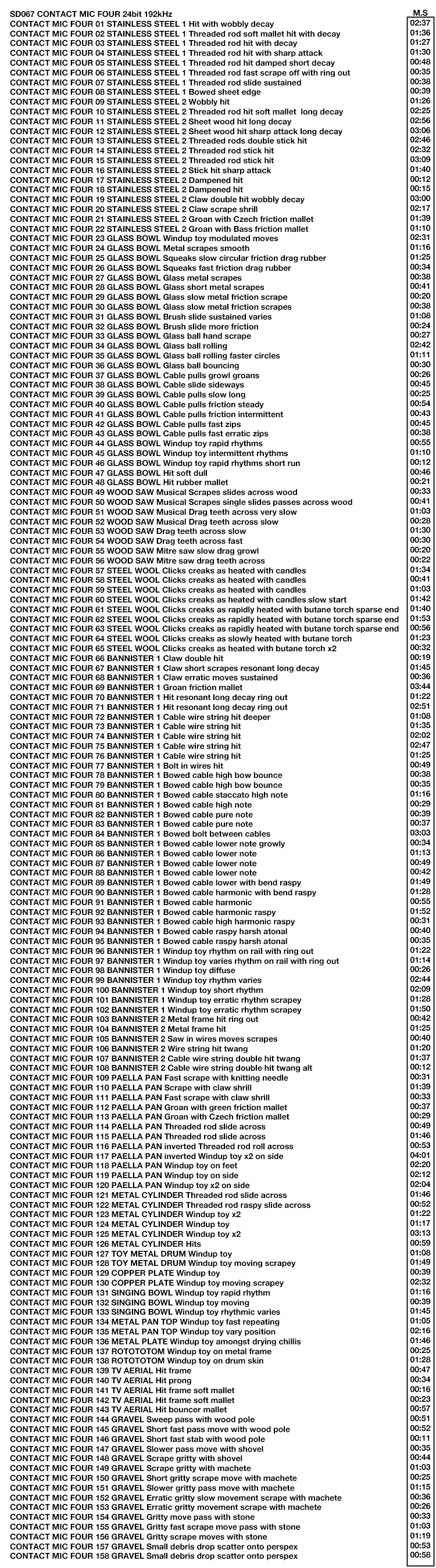
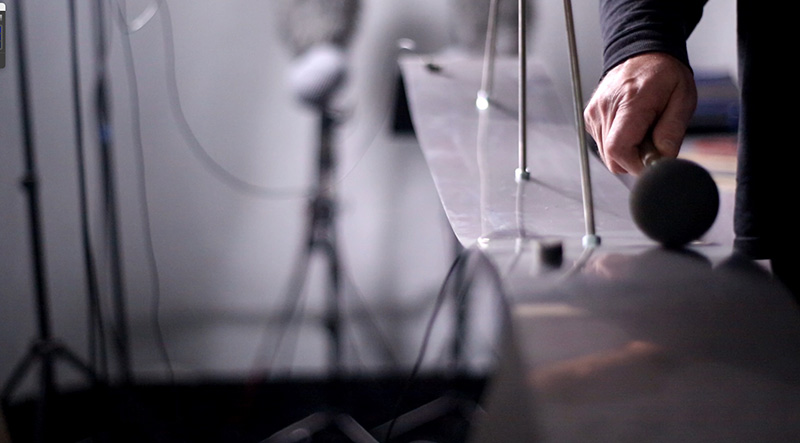
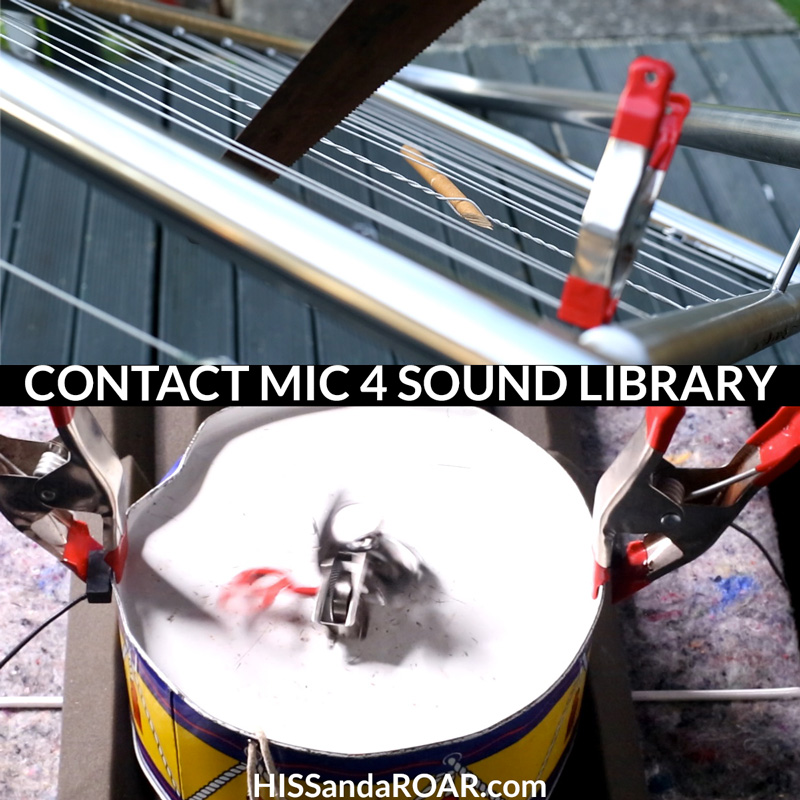
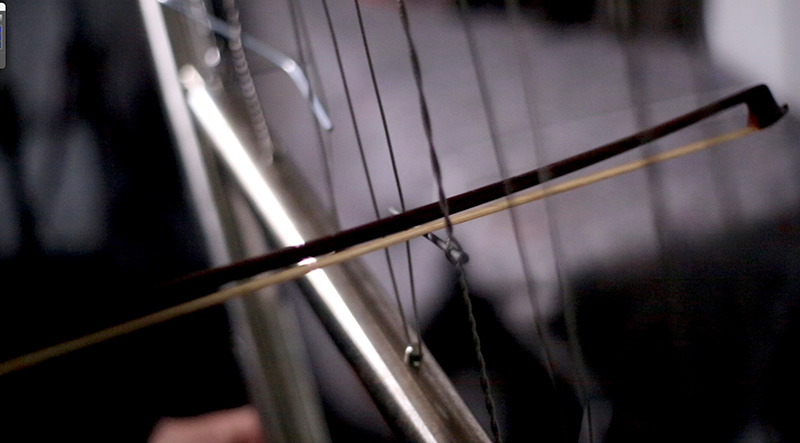
For this library I constructed two stainless steel sculptures, inspired by Len Lye both in their physicality and activation. Along with the usual tools – percussion mallets, double bass bow, friction mallets etc I have also captured some really unique sounds modulated by wind up toys! At times these chatter like mechanical insects, or some tiny drummer on amphetamines but most interesting to my ears was performing doppler scrape passes modulated by the wind up mechanism.
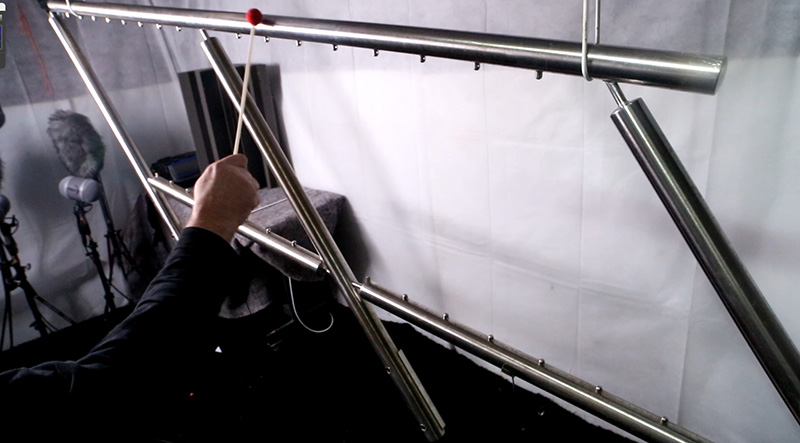
A few months ago I rescued two steel bannisters from a house redevelopment, each of which was strung with steel wire. These produce beautifully resonant hits & impacts, but after tensioning the steel wires I also extracted gnarly bowed notes & textures that have a unique grit to them.
After capturing many other props – a big glass bowl, a paella pan that rings like a gong, a few different plates of different metals and three wood saws, a friend tipped me off to the idea of capturing thermodynamic change in steel wool which produced some really surprising sounds – at times sounding like sparse rain on a tin roof, then a seagull party on the roof and via butane torch, some kind of apocalyptic rush of metallic groans and clicks…
Check out the video for starters – over the next week I will output a series of videos as there is so much material to draw from that the short video does not do the range & scope of this inspiring library justice!
Recorded 32bit 192kHz this new library is released 24bit 192kHz with full UCS metadata and photos..